WordPress
Flexible platform with strong focus on SEO, content, and WooCommerce.
We design and develop e-shops with proper product structure, easy navigation, fast loading speeds, and SEO, so visitors can find what they need and purchase without friction.
Eshop development is the most direct way for a business to sell in an organized, reliable manner without geographical limitations, using the internet as a stable sales and growth channel.
A modern online store is not just about listing products online. It is about how users find, understand, trust, and ultimately complete a purchase through a website that operates with clear goals, proper structure, and technical efficiency.
In today’s digital reality, an eshop is a core business tool for companies that want to expand beyond a physical store. Through a properly designed website, a business gains continuous access to a purchasing audience, with the ability for direct promotion, sales, and communication.
Eshop development is effective when it combines clear navigation, proper product presentation, reliable payments, and technical infrastructure that supports speed, security, and SEO. Without these elements, even a visually appealing online store struggles to perform.
Successful eshop development starts with understanding what the business sells, who the target audience is, and what the user intent looks like. A brand selling physical products has different needs than a digital product or a service with online payments. Platform selection, structure, and functionality derive from this strategic analysis.
In cases where there are no products for sale and the goal is service promotion or professional presence, website development is a more suitable solution. In these cases, site functionality, content structure, and user experience are the key performance factors. website design and development
An online store allows a business to reach audiences beyond local boundaries, enabling users from different regions to discover and purchase products through a single unified platform.
The eshop operates independently of business hours, allowing purchases at any time. This turns the website into a permanent sales point, without the need for physical presence.
A well-organized, fast, and properly structured eshop builds user trust, as navigation experience, product presentation, and information clarity directly influence purchasing decisions.
Compared to a physical store, an eshop requires fewer fixed expenses, while allowing targeted investments in marketing and optimization, with the goal of gradually increasing sales and performance.
The choice of platform for eshop development directly affects functionality, scalability, and the overall performance of the online store.
The right decision is based on factors such as product volume, functional complexity, and the level of control required by the business.
Flexible platform with strong focus on SEO, content, and WooCommerce.
Stable structure with increased content management control.
Ideal for large and demanding projects with strong emphasis on security.
Pure e-commerce solution for product and order management.
Simple and fast solution for small eshops with basic needs.
Enterprise-level platform for complex e-commerce ecosystems.
Custom e-shop design refers to building an online store that does not rely on predefined templates, but is designed based on product structure, target audience, brand identity, and user behavior. Its value emerges when the eshop operates not merely as a catalog, but as a guided path leading visitors toward purchase.
This approach is suitable for businesses with a clear commercial strategy, a need for differentiation, and a focus on long-term performance. Conversely, when the goal is simply a fast online presence, custom design is not always the optimal choice.
When a graphic mock-up already exists, eshop development focuses on faithfully translating the design into a real sales environment. This ensures that the final result preserves visual identity without sacrificing usability or performance.
Custom design is applied across all core eshop pages, such as homepage, categories, product pages, and checkout, ensuring a unified and easily understandable user experience.
A custom eshop allows full control over content structure, navigation flow, and technical implementation. This results in cleaner code, faster loading, and better content understanding by search engines.
On the SEO level, customized architecture enables proper heading hierarchy, logical category organization, and optimized product pages, without the limitations often imposed by ready-made templates.
Using Elementor Pro in a custom implementation allows clean layouts with a mobile-first approach, proper use of semantic elements, and controlled resource loading. As a result, the eshop remains flexible, fast, and user- and search-engine-friendly.
Custom e-shop design is not recommended when a project is still experimental, when product strategy is not yet defined, or when the budget does not allow proper implementation and maintenance. In such cases, a simpler solution may perform better in the short term.
A brand with specialized products needs to explain usage, benefits, and differences between items. Through custom design, presentation is organized into clear informational stages, guiding users from understanding to purchase decision without unnecessary friction.
When structure, content, and speed work together, the eshop achieves steady visitor flow, better engagement, and increased conversion, without the need for constant interventions.
Custom design enables the addition of new features, such as extra sales channels, blog integration, multilingual support, or connections with external systems. The infrastructure remains flexible, without requiring a complete redesign.
WooCommerce templates are ready-made online store structures that allow fast eshop creation without designing from scratch. They are a functional choice when the goal is quick market entry, with basic commercial functionality and limited customization needs.
This solution mainly suits businesses that want to test a product or market without initially investing in custom design or complex infrastructure.
Among thousands of available WooCommerce themes, a template can be selected that aligns with the company’s style and colors. With limited adjustments, the eshop gains a professional look without time-consuming design processes.
Using templates significantly reduces eshop development time. The store can go live quickly, allowing the business to start selling immediately, with lower initial investment.
Modern templates are designed to function correctly across mobile, tablet, and desktop devices. This ensures basic usability and acceptable shopping experience, without advanced device-specific optimizations.
Most WooCommerce templates include basic SEO-friendly structure, with proper heading usage and clean HTML. However, advanced optimization options are often limited by the theme’s architecture and the need for additional plugins.
WordPress combined with WooCommerce allows easy addition and editing of products, prices, and descriptions. This gives businesses autonomy without constant reliance on technical support.
Template solutions are not suitable when an eshop requires strong differentiation, complex sales flows, or high performance demands. In such cases, predefined structures can negatively impact conversion and scalability.
| Platform | Control & Ownership | SEO & Content | Flexibility / Scalability | When It Is the Right Choice |
|---|---|---|---|---|
| WooCommerce (WordPress) | Full control and ownership | High SEO potential and content-driven growth | Excellent scalability | When the eshop is connected to a website, SEO strategy, and long-term growth |
| PrestaShop | High level of control, increased complexity | Solid SEO foundation, less content flexibility | Strong for large product catalogs | When the focus is on products rather than content |
| OpenCart | Basic control | Limited SEO capabilities | Suitable for simple eshops | When a simple and low-cost solution is required |
| Shopify | Limited (platform-owned) | Basic SEO, limited content control | Easy to start, limited customization | When speed is the priority rather than ownership |
A small business launching new products may start with a template-based eshop to evaluate demand. If interest increases, transitioning to a custom design allows experience optimization and increased sales.
Eshop synchronization with suppliers enables automatic transfer and updates of products from external sources into your online store, drastically reducing management time and human errors.
This is a strategic solution when an eshop relies on a large product catalog, frequent price changes, or stock that is not directly controlled by the business.
By connecting your eshop with the supplier’s system, new product additions and updates are performed automatically, without manual intervention or daily content management.
Synchronization covers critical fields such as images, titles, descriptions, prices, discounted prices, attributes, and availability, keeping the store constantly updated and functional.
The process is based on the availability of structured data files (XML, CSV, or API) from the supplier, containing consistent and reliable information. Without this prerequisite, automation cannot operate safely.
Synchronization performs well when data structure is stable, field mapping is clear, and import strategy is properly designed. In these cases, the eshop gains update speed, content consistency, and improved end-user experience.
Direct data import without quality control, filtering, or brand adaptation often results in low-quality descriptions, SEO issues, and loss of differentiation.
One of the most common mistakes is complete dependence on supplier feeds without any content refinement. This leads to identical eshops, with no brand identity and limited organic performance.
Synchronization is not the right choice when the product count is small, when content requires strong storytelling, or when suppliers do not provide reliable data. In these cases, manual management offers better control.
An eshop with thousands of technology products that update prices and stock daily uses XML synchronization to remain competitive. The result is consistent updates, fewer errors, and the ability to focus on marketing and sales.
Eshop synchronization with suppliers is effective when there is a reliable data source and strategic content control, but fails when applied blindly without adaptation and quality filtering.
A modern eShop functions as the central hub of a business’s digital presence. It connects products, content, user experience, and the purchasing process into a single system that must be clear, reliable, and functional.
Proper eShop development takes into account the business model, the target audience, technical requirements, and the ability to evolve in the future. It is not based on generic solutions, but on decisions that support long-term performance and adaptation to market changes.
There are cases where an eShop is not the right solution: when there is no clear product strategy, when the supply chain cannot support online sales, or when the business is not ready to invest in ongoing operation and maintenance. In such cases, a simple informational website can be a more mature and realistic choice.
However, when there is a clear goal, proper preparation, and correct implementation, an eShop becomes a tool that goes beyond sales. It supports the brand, builds trust, and creates a stable foundation for growth.
eShop development, when approached with strategic thinking and technical consistency, does not function as a standalone project but as infrastructure. Infrastructure that can evolve, connect with new channels, and remain effective over time.
Building an eShop is not a uniform process and does not deliver the same results for every business. The right approach depends on the business model, the maturity stage of the brand, the type of products, and the role the online store plays in the overall customer journey.
The strategic decision is not about “whether you need an eShop,” but about “how it should operate.” When development is based on real user intent, a clear funnel, and solid technical infrastructure, the eShop functions as a sales tool and not merely as an online catalog.
A business with a physical store and a base of repeat customers proceeds with eShop development focusing on clear categorization, fast navigation, and a simplified checkout process.
The result is not just online sales, but a steady increase in returning users, a better shopping experience, and higher trust in the brand.
eShop development succeeds when it is based on a clear business objective, proper product structure, and an intent-driven user experience, and it fails when it is treated as a purely technical implementation without strategic direction.
The value of an online store is not judged solely by aesthetics, but by how effectively it serves its business purpose: converting traffic into sales, operating smoothly, and adapting to market needs.
The following eshops represent different implementation approaches, designed based on business scope, target audience, and brand maturity. Each project was built on clear structure, functional navigation, and technical choices that support SEO, speed, and conversion.
drnikoschristakis.gr
evritika.gr
greekacademy.gr
hotspotmob.gr
chopperhead.gr
yogaloom.com
anagennisipsichis.gr
An e-shop delivers results when it is designed with a business-oriented mindset and not merely as a technical implementation. Proper e-shop development combines strategy, user experience, technological stability, and the ability to scale without limitations.
The choice of partner for e-shop development directly affects performance, security, and the long-term sustainability of your investment. That is why the process is based on clear decision-making criteria rather than promises.
Experience in e-shop development is reflected in the ability to solve real-world problems: from product structure and order management to proper checkout flow and stability under high traffic. Expertise translates into solutions that work in practice, not just on paper.
The aesthetics of an e-shop have value only when they support usability. Development is based on UX principles and clear navigation, allowing visitors to quickly find what they are looking for and complete their purchase without obstacles or confusion.
Speed is not a technical detail but a core performance factor. A fast e-shop reduces abandonment, builds trust, and supports the overall shopping experience, especially on mobile devices.
SEO optimization is not added later. It is integrated from the design phase, with proper category architecture, SEO-friendly URLs, clean content, and technical specifications that allow search engines to understand and properly rank the e-shop.
SEO strategies are implemented with a focus on sustainable organic growth rather than short-term results.
The majority of purchases are now made via mobile devices. E-shop development takes the mobile experience into account from the start, ensuring that content, navigation, and checkout function seamlessly on every screen.
Every e-shop has different requirements. Development is tailored to the type of products, sales process, payment methods, and shipping options, without unnecessary features that burden the user experience.
Security is a prerequisite for trust. E-shop development takes into account proper data management, transaction encryption, and compliance with modern personal data protection requirements.
Daily e-shop management should not require technical dependency. The management system allows product, pricing, and content updates in a simple and intuitive way, supporting business autonomy.
An e-shop is not a static project. Continuous support and upgrade capabilities ensure that the platform can evolve with the business, integrate new features, and adapt to market changes.
Building an e-shop with GR-NET costs from €1200 to €5000, depending on your needs and project requirements.
The development of your e-shop is completed within one month, depending on the complexity of the project.
Yes, GR-NET provides ongoing support and assistance for any issue that may arise after the development is completed.
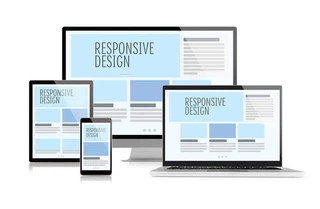
Yes, all e-shops built by GR-NET are fully responsive, ensuring flawless appearance and functionality on every device.
We use popular platforms such as WooCommerce, PrestaShop, Magento, OpenCart, and others, depending on the requirements of your project.